Hidden Land Factors That Can Blow Your Building Budget
Checking the title for easements and covenants is only part of the picture. Other overlooked factors on a block of land can significantly affect your build cost — and most property owners don’t spot them until construction is underway.
This guide covers three often overlooked cost factors: trees, slope of land, and title boundary discrepancies.
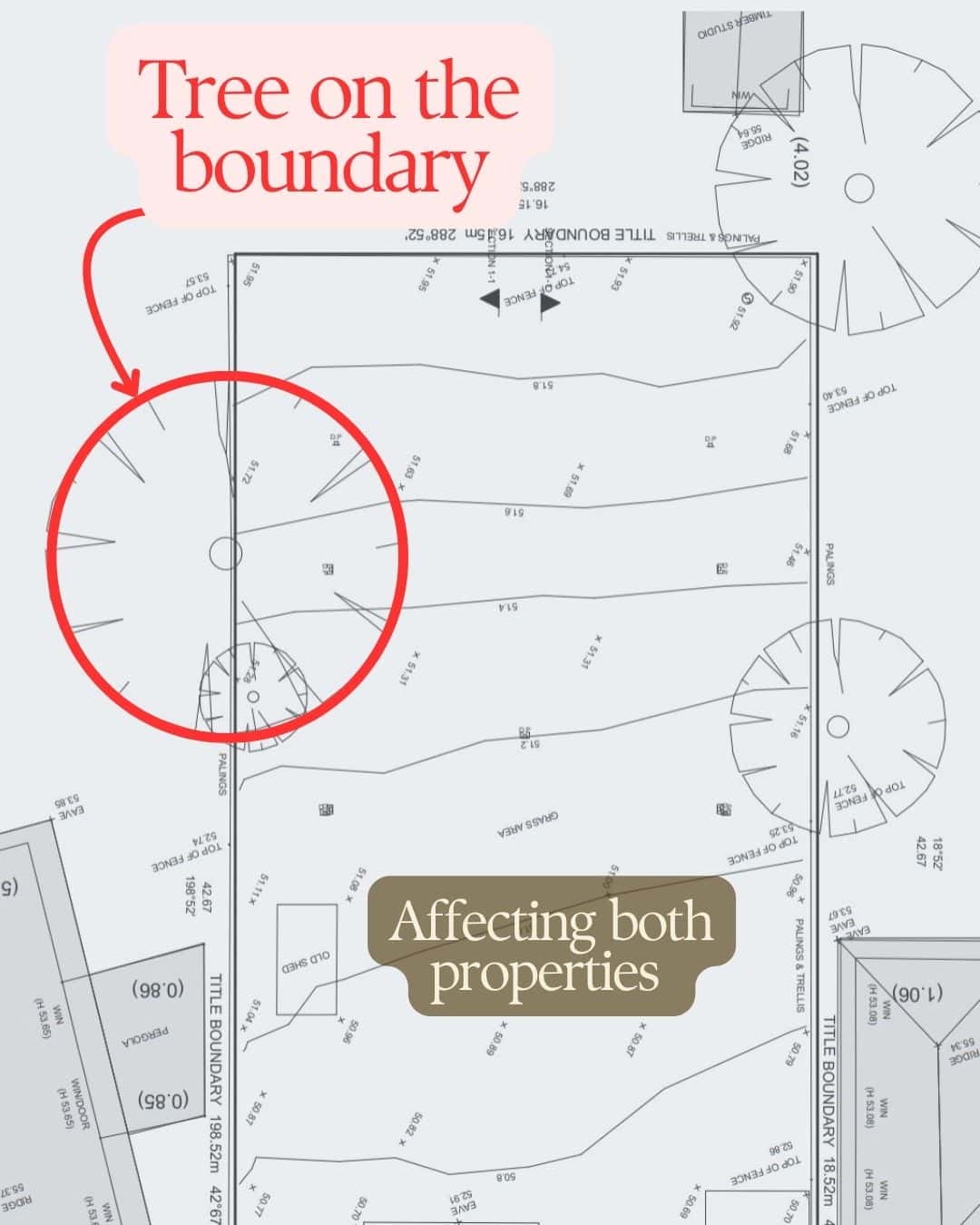
1. Trees
When buying land, pay close attention to trees, especially large ones near the boundary between your site and the neighbouring property.
A tree might look small above ground, but its root system can spread 5–6 metres — making footings far more complex and expensive to design around. Regulations around trees are also getting stricter, so checking with your local council before you buy can save you from unexpected restrictions down the line.
Factor tree root systems into your footing solution and budget — and check current tree regulations before you buy.
2. Slope of Land
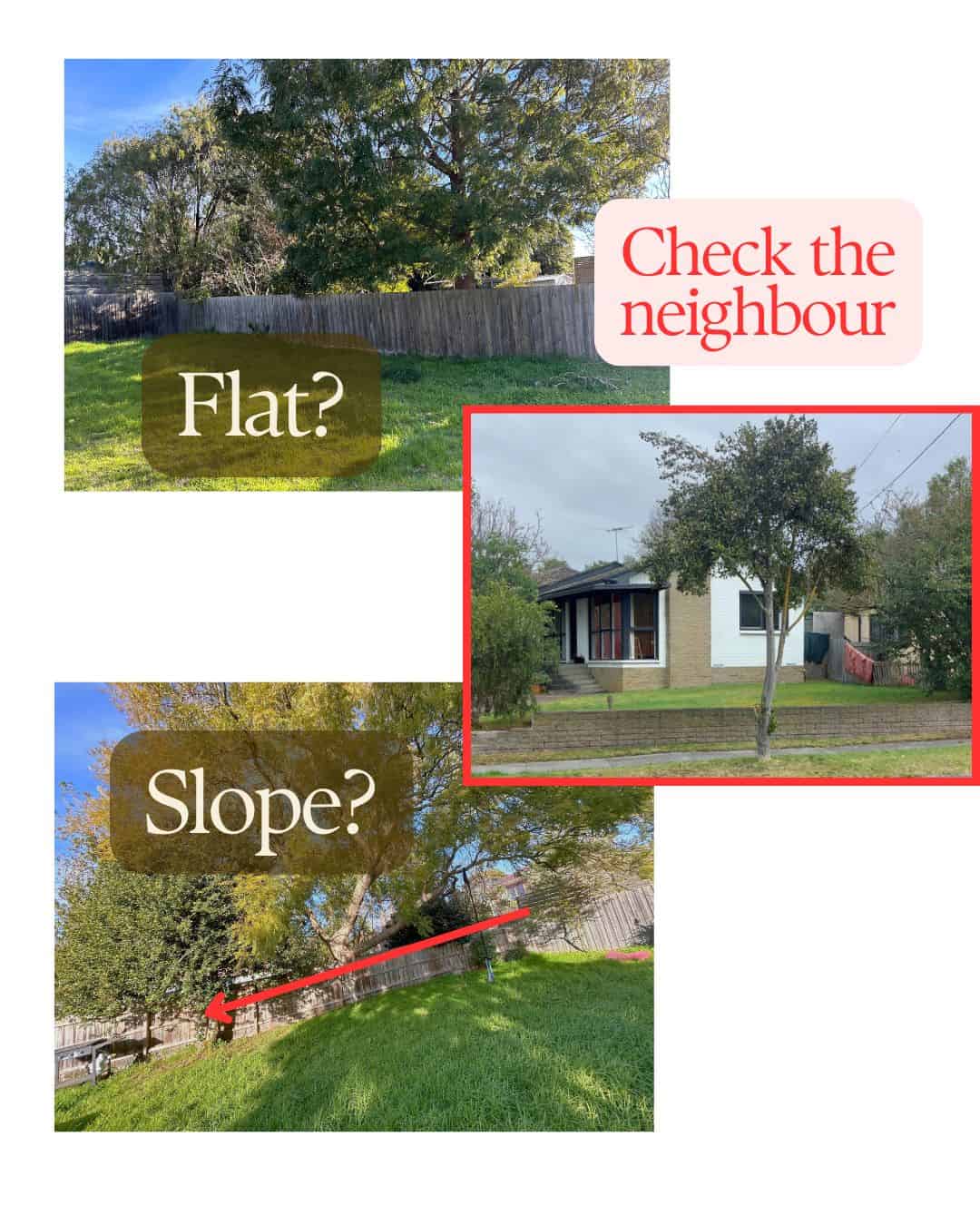
A site can look completely flat on the surface, but that doesn’t mean it is. To properly assess slope, look at neighbouring properties and how their footings are constructed.
If neighbouring footings are on stumps, or there’s a noticeable fall from the rear boundary to the front (or vice versa), this affects your footing options and overall cost. Left unaccounted for, slope can add tens of thousands of dollars to a build once excavation and non-standard footing systems are factored in.
Depending on the site, solutions may include:
- Split-level design
- Waffle slab instead of a standard slab
- Stumps
The right solution depends on what’s most cost-effective and durable for that specific site.
Inspect neighbouring footings and site fall carefully – slope can significantly change your foundation costs.
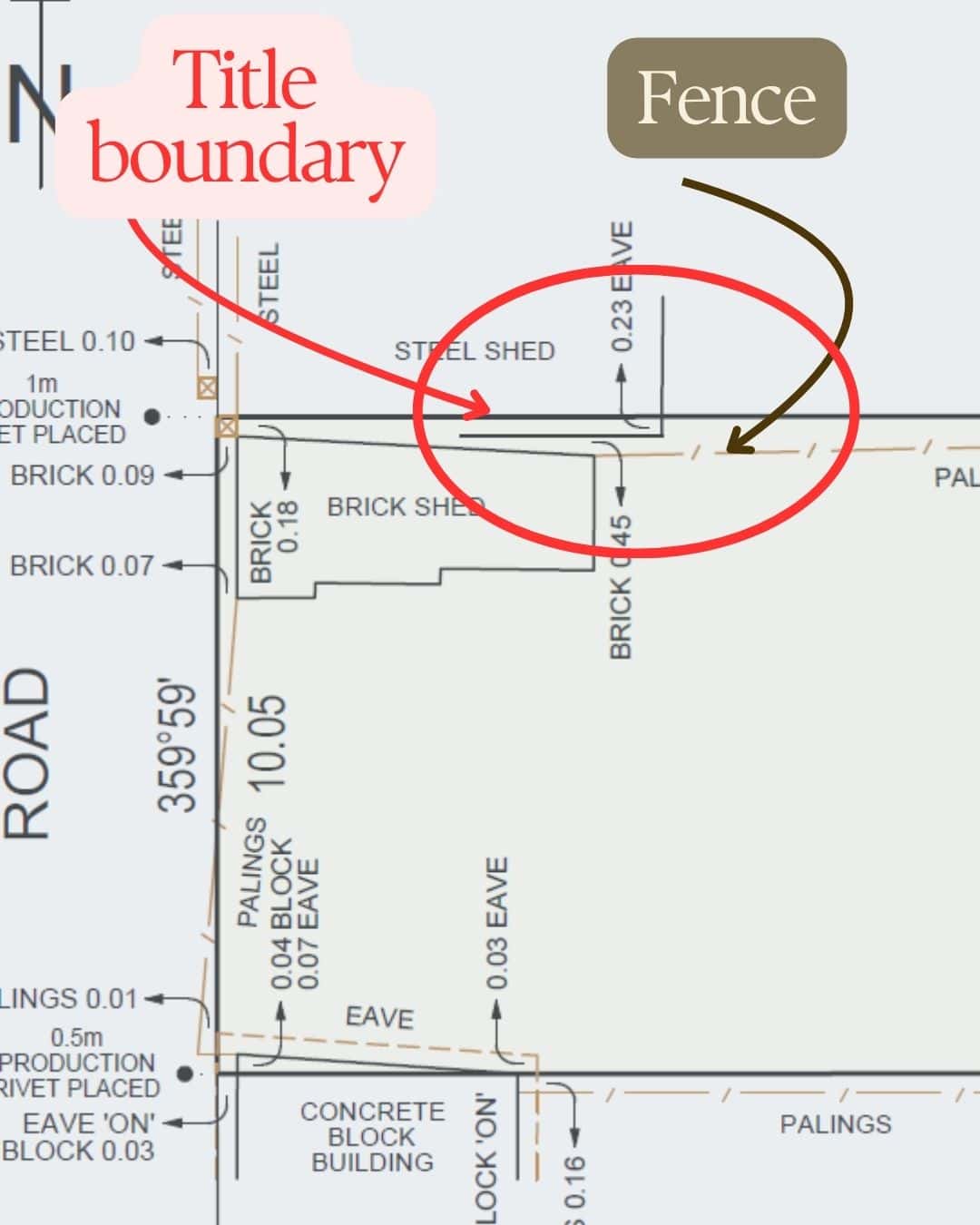
3. Title Boundary vs Fence Location
Discrepancies between the title boundary and the actual fence line are common — and can be significant, especially on tight sites in Melbourne suburbs.
This directly affects usable land area, setbacks, and design, so it’s an important check before finalising your build plans. On narrow blocks, even a small discrepancy can be the difference between a design that fits comfortably and one that requires costly compromises.
Don’t rely on the fence as the boundary — verify the true title boundary, particularly on smaller or tighter blocks.
Frequently Asked Questions
Can I remove a large tree to avoid dealing with its root system? In many Melbourne councils, significant trees are protected and require a permit to remove — even on private property. It’s important to check with your local council before assuming a tree can simply be removed.
How much can slope really add to a build? It varies by site, but sloped blocks often require additional engineering, excavation, or non-standard footing systems, which can add a meaningful amount to your overall build cost compared to a flat site.
Is a boundary discrepancy something I need to fix before building? If the gap is significant, it generally needs to be resolved — either through survey confirmation or discussion with the neighbouring property — before your design and permits can proceed.